
Clay Detention Release Paths
Clay County Detention Center is the county's confirmed local adult jail. It holds people at several stages, including those awaiting a first appearance or trial, those who have not met release conditions, those serving local sentences, and people held for another authority. That mix makes the departure field essential. The jail's own booking and release record is the best local source for the date and time someone physically left.
A community departure may follow bond, a written promise, a court order, dismissal, completion of a local sentence, time served, or another authorized event. Leaving the building does not always mean freedom from custody. A transfer to the North Carolina Department of Adult Correction, another jail, the U.S. Marshals Service, ICE, or a medical provider ends Clay County jail custody while another custodian may still control the person.
| Departure | What it means | Next check |
|---|---|---|
| Community release | The person left custodial confinement under the stated authority | Jail release record and court docket |
| NCDAC transfer | State custody continues | NCDAC Offender Public Information |
| Other jail | Local confinement continues elsewhere | Named receiving county or facility |
| Federal or ICE handoff | County custody ended, but federal custody may continue | BOP, USMS, or ICE channel |
Confirm a Clay Detention Release
No verified official current roster, recent-release feed, or searchable archive was found on Clay County's pages. Call the official detention center and use exact identifiers. A name alone can match more than one person. Supply a date of birth when appropriate, a booking or case number if known, and the likely custody dates.
- Ask whether the named person is housed at the Clay County Detention Center now.
- If not, ask for the date and time of departure and whether it was a community release or a transfer.
- Request the release type or authority and the destination agency, to the extent public.
- Match a community release to the Clay court docket or filed order when the legal basis matters.
- Follow a transfer through the receiving state, county, federal, or immigration system.
The Clay County released-inmate search and records overview explains how the jail entry, court result, NCDAC record, and federal systems fit together. Use two compatible sources when possible. A court order can explain the authority, while the jail record supplies the physical departure time.
Clay Detention Release Records
If telephone staff cannot give historical detail, ask the Clay County Sheriff's Office which custodian and delivery method it currently uses. No dedicated online form, records email, fee sheet, or promised response time was verified. The request should seek an existing booking and release record, not demand that the agency create a new report.
Address the request to the sheriff at 295 Courthouse Drive, Hayesville, NC 28904. The office telephone is 828-389-6354 and the fax is 828-389-6375. Ask for the person's booking and release record for a precise date range, including booking time, release time, release type or authority, and receiving agency if the event was a transfer. Request the associated booking photograph separately, “if retained and public,” because a release log may not contain an image.
- Release authority
- The bond action, court order, sentence event, or other basis recorded for departure.
- Detainer
- A request or legal basis for another authority to hold or receive the person.
- Transfer
- A move to another custodian, not a community release.
- Discharge
- An agency term that may end custody or supervision; its exact field definition controls.
North Carolina G.S. 132-6 permits inspection and copies of public records subject to exceptions. G.S. 132-6.2 generally limits copy charges to actual cost, with a possible special service charge for extensive technology or staff use. Ask for an electronic copy in the format already kept and an estimate before charges are incurred.
Clay Detention Center Contact
The county page is the controlling source for current contact details. It lists the facility separately from the sheriff's administrative office, so the two addresses should not be merged. The page does not publish release-processing hours, a public discharge door, property-pickup steps, or weekend and holiday practice.
Clay County Detention Center281 Courthouse Drive
Hayesville, NC 28904
Phone: 828-389-8207
Fax: 828-389-3784
The 2024 North Carolina Jail Administrators' Association directory lists a rated capacity of 52. It also lists a detention email and named administrators, but assignments can change. Reconfirm a staff name before directing a request to an individual.
The official Clay County sheriff page is shown below as the verified local agency contact.
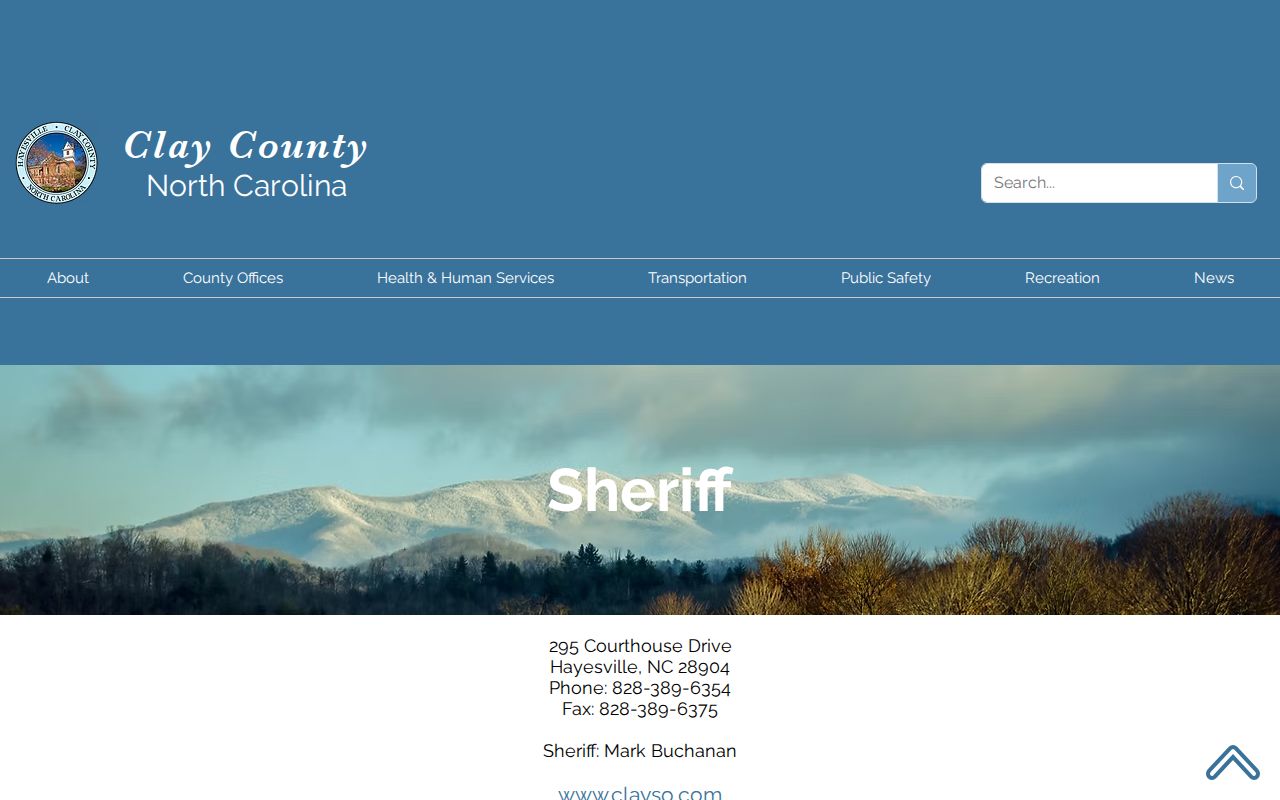
Its contact information supports a direct custody check, but the page does not supply a released-person roster or archive.
Transfers From Clay Detention
A statewide jail directory rates this detention center at 52 beds. In a small facility, a person may leave because another institution becomes the receiving custodian. Capacity, staffing, medical needs, court movements, or another agency's authority can all make transfer an important alternative to a community release. The directory documents facility capacity, not any individual's departure.
Ask for the destination field rather than inferring from absence. If the destination is NCDAC, search the offender number or name in state records and compare dates. For an inter-jail transfer, contact the named county. A USMS move may not appear in the BOP locator, while an ICE handoff requires the immigration custody path. This facility-specific step prevents a false claim that someone went home.
The official Clay County Government Center page provides the court contact source shown below.
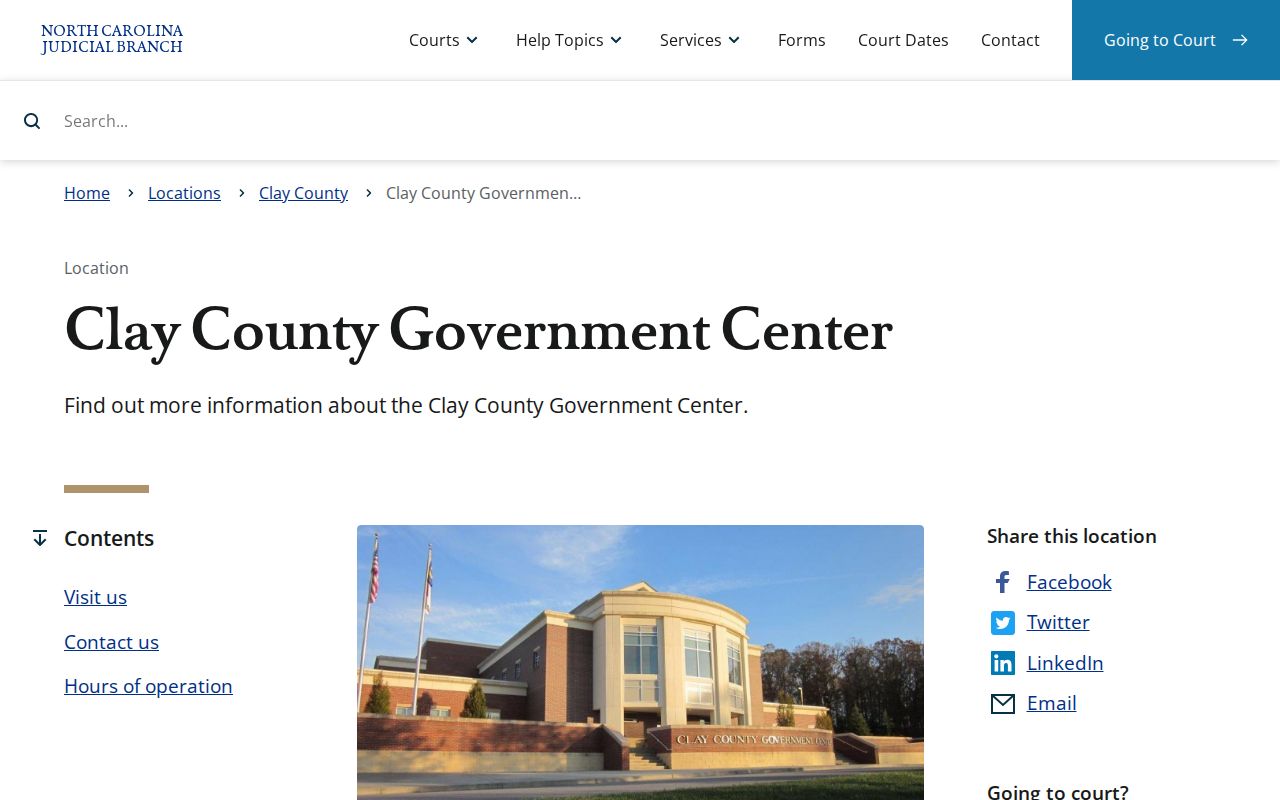
Use the court page for the legal record layer, then use the jail record for the named physical release or transfer.
Clay Release Orders and Departure
A bond action, dismissal, time-served judgment, or other court event can supply the legal reason for release. It does not prove when staff finished discharge or that every separate hold was cleared. Clay County case information is available through the North Carolina eCourts Portal, and fuller case material may be reviewed through the clerk's public terminal or paper file.
Compare the charge-by-charge docket with the jail record. One dismissed charge can coexist with another active case. A calendar lists scheduled proceedings and is not proof that a hearing occurred or an order was entered. The filed order establishes the court action; the Clay detention record establishes the physical departure. That difference is crucial when the two timestamps do not match.
Note: Confirm the entered order and the detention release entry before describing a Clay County court event as a completed community release.
Unpublished Clay Release Details
Several practical details remain unpublished. Clay County's official page does not state routine discharge hours, the exact public exit, property-return steps, weekend or holiday rules, roster refresh timing, online retention, record-request fees, or a response estimate. Common practices at another North Carolina jail cannot fill those gaps.
Call before traveling or arranging pickup. Ask the detention center what it can confirm for the named event, and do not promise a departure time based only on a court calendar or projected sentence date. The county's thin online layer makes a precise name, booking number, case number, and absolute date range more useful than a broad request.
Note: Direct confirmation is the only researched route for Clay release logistics that the county does not publish online.
Match Clay Release Identities
A Clay County release inquiry should begin with more than a name. Compare the middle name or initial, date of birth or approximate age, booking number, case number, physical descriptors, and custody dates. A photograph can help locate a candidate record, but it cannot prove identity by itself. If staff can confirm only that a person with the same name departed, ask which nonrestricted identifier can distinguish the booking.
Connect each source by date and identifier. The jail booking number ties the release entry to the local custody event. The court case number ties a bond action, dismissal, judgment, or sentence to the correct charge. An NCDAC offender number follows a separate state record. Keeping those identifiers separate prevents an old state case from being used to explain a new Clay jail departure.
When two records conflict, preserve both literal statuses. Ask the detention center whether another charge, hold, or destination controlled release. A court dismissal may be accurate while the person remains held on a second matter. The jail timestamp may also follow the court order because staff must complete processing and clear other holds.
Clay Release Record Boundaries
North Carolina's Public Records Act does not make every part of a jail or investigative file public. G.S. 132-1.4 treats criminal-investigation and criminal-intelligence records as nonpublic while identifying certain law-enforcement information that can be released. A focused request for booking time, release time, release authority, and transfer destination is more precise than a demand for the entire file.
Juvenile material, sealed or expunged matters, medical information, victim identifiers, security-sensitive facts, and active investigative details may be restricted. If the sheriff redacts or denies a field, ask for the statutory basis and for any segregable public portion. The law also does not require Clay County to create a new 24-hour or 72-hour compilation that it does not already keep.
No official source states how long a Clay booking or photograph remains online because no verified public archive was found. Internet display and agency retention are separate questions. Ask for the underlying record and the applicable retention schedule. An absent web entry cannot establish that no custody event occurred.
Public Record Search
Sponsored Results