
Clay County Federal Release Paths
The Facility Map includes the federal system because a person can leave the Clay County Detention Center under federal authority even though no federal prison sits in the county. The local jail can be the physical custodian while the U.S. Marshals Service controls a pretrial movement. A later federal sentence may create a BOP offender record, but the public BOP locator is not a complete list of all people held for USMS.
A Clay jail entry saying the person was released to USMS records the end of county custody and a federal transfer. It does not mean release to the community. Follow the federal custodian. If the person was a sentenced BOP prisoner, the BOP result can show the eventual release date. If the question concerns a pretrial move or historical USMS custody, a focused Marshals Service records request is the stronger route.
| Federal path | Public starting point | What it proves |
|---|---|---|
| Sentenced BOP custody | BOP Inmate Locator | Location and release date within BOP records |
| USMS pretrial detention | USMS confirmation or FOIA | Federal detention or movement controlled by USMS |
| Clay jail handoff | Clay booking/release record | The time county custody ended and named destination |
| Federal supervision | Federal court or supervision record | Conditions that may continue after prison release |
Search Federal Clay Release Records
Use the BOP Inmate Locator for sentenced federal custody from 1982 to the present. Search by BOP register number when known. The form also accepts FBI, INS, or DCDC numbers. A name search uses first, middle, and last name, with age, race, and sex available to narrow matches.
- Choose an identifying-number search whenever a reliable federal number is available.
- For a name search, enter the full name and add only verified demographic details.
- Compare register number, age, race, and sex before selecting a result.
- Read both the release date and location exactly as displayed.
- Distinguish a past date from a future projected date and “RELEASED” from “IN TRANSIT.”
The official BOP form appears in the capture below.
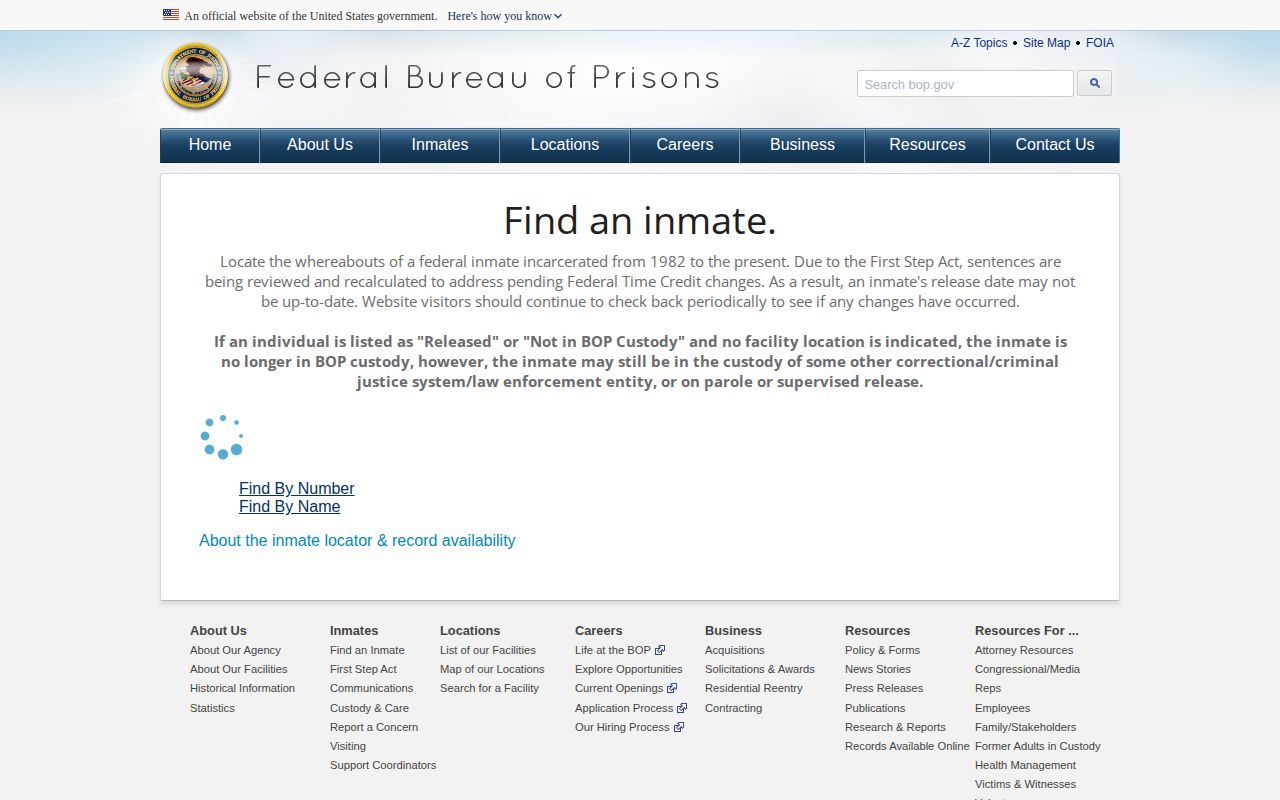
The locator is the right public entry for BOP records, but it cannot replace Clay jail confirmation for a local departure or USMS confirmation for a pretrial detainee.
Read a Clay Federal Release Result
BOP results display the person's name, register number, age, race, sex, release date, and location. According to BOP's own explanation, a past release date with no institution indicates release occurred on that date. A location of “RELEASED” means the person is no longer in BOP custody.
That wording is narrow. It does not promise that the person returned to Clay County, finished federal supervised release, or avoided transfer to another justice system. “IN TRANSIT” is not release. A future date is a projection and may change through sentence recalculation. The result must be quoted in substance without broadening what the agency says.
- Register number
- The identifying number used to distinguish federal records.
- Released
- No longer in BOP custody, based on the BOP location field.
- In transit
- Moving within or between custodial arrangements, not released.
- Supervised release
- A court-ordered community supervision period that can follow federal imprisonment.
The BOP record explanation is captured here.
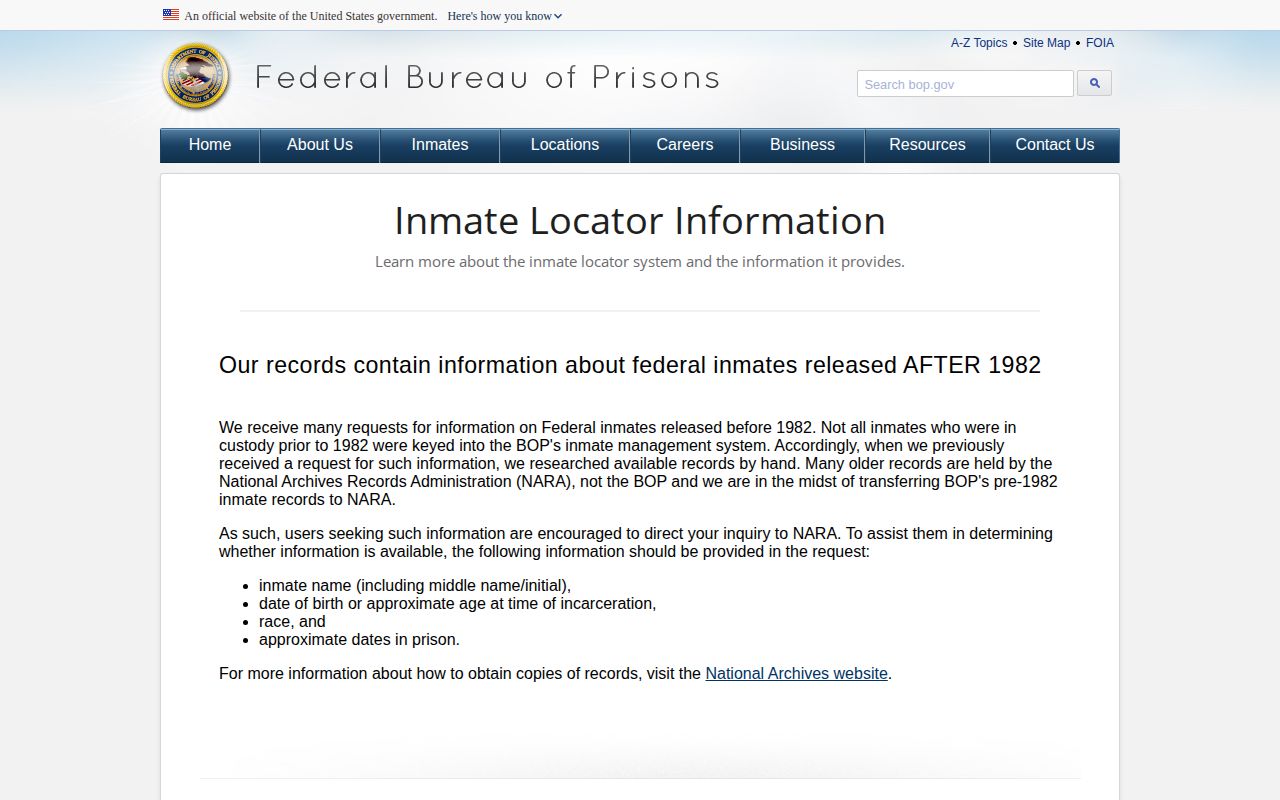
Use the explanation to interpret the federal fields, then check the controlling court or agency if custody or supervision continued elsewhere.
Clay Jail to Federal Custody
When someone disappears from Clay County detention after a federal handoff, obtain the local departure event first. Ask for the release date and time, the release type or authority, and the destination agency. The local entry can show that Clay custody ended with USMS or another federal receiver.
BOP's public locator may not return a federal pretrial detainee. USMS commonly controls detention and movement before sentencing, even when a county jail provides the bed. A missing BOP result therefore cannot show that the person was freed. It may mean BOP never became the custodial record system for that phase.
If a federal sentence later begins, search BOP again with the official number. For a past Clay handoff, keep both records: the jail entry documents the local endpoint, and the federal record documents what followed.
Request Clay Federal Release Records
For a historical BOP record that is not resolved by the locator, follow the BOP FOIA instructions. Describe the exact record and supply sufficient identifying details. Fees, privacy rules, and exemptions may apply. Records before 1982 may require the National Archives rather than the modern locator.
For USMS custody or movement history, use a focused U.S. Marshals Service FOIA request. State the person's name and identifiers, the federal district if known, approximate dates, and the precise custody or movement record requested. Privacy and law-enforcement exemptions can restrict disclosure.
Federal records routingBOP locator and FOIA: bop.gov
USMS historical custody: usmarshals.gov/foia
Clay local departure: 828-389-8207
A request to the Clay County Sheriff cannot compel BOP or USMS to release federal records. Send each request to the agency that created or controls the record.
Clay Federal Release Versus Freedom
A BOP release can lead to federal supervised release, another jurisdiction's warrant, state custody, immigration custody, or the community. The locator does not certify that every other hold ended. It also does not show the final result of every local or state case connected to the same person.
| Result | Safe conclusion | Further check |
|---|---|---|
| Past date and RELEASED | Departure from BOP custody | Federal court and other custodians |
| Future release date | Current projection | Updated BOP record |
| IN TRANSIT | Federal movement continues | BOP or controlling agency |
| No BOP result | No conclusive BOP match | USMS, Clay jail, or identifier review |
The Clay County release-search hub compares the county, state, court, BOP, and ICE channels. Use the system that last controlled custody instead of forcing every person through one locator.
Clay Federal Release Data Limits
Names can collide and old records can be incomplete. Compare the register number whenever possible. Do not treat location wording as broader than the BOP definition, and do not turn a past release date into proof of residence or present location. A federal release record describes one custody system.
Dates also carry different meanings. A projected date, an actual BOP release, the beginning of supervised release, and the end of court supervision are separate events. When systems disagree, retain the literal statuses and contact the agencies instead of choosing the result that appears most favorable.
Note: A federal release linked to Clay County should always identify whether the source is the county jail, USMS, BOP, or the federal court.
Match a Clay Federal Record
A common name is not enough to connect a BOP result to a Clay County event. Prefer the BOP register number or another official federal identifier. For a name search, compare age, race, sex, middle name, court district, case timing, and the local departure date. A similar name with a plausible release date can still belong to another person.
The Clay jail's booking or case number and the BOP register number belong to different systems. Preserve both. The county record shows who left Clay custody and the receiving authority. The federal number identifies the BOP record. If USMS controlled the move, a later BOP number may not yet exist or may never describe the pretrial phase.
For a person released long ago, BOP coverage before 1982 is incomplete. The National Archives may hold older material. Do not treat the absence of a modern locator result as proof that no federal custody occurred.
Clay Federal Release Date Meanings
Federal records use dates for different stages. A future locator date is projected. A past BOP release date records departure from BOP custody. The start of supervised release is a court-supervised community event, and its end is a later legal milestone. A USMS transfer date identifies movement during federal detention. None should be shortened to an undifferentiated “release date.”
| Date or status | Custody meaning |
|---|---|
| Future BOP release date | A projection subject to recalculation |
| Past date with RELEASED | Departure from BOP custody |
| IN TRANSIT | Movement within continuing custody |
| Supervised-release period | Community supervision ordered by the federal court |
| Clay release to USMS | County custody ended with a federal handoff |
Use the source's label and identify the agency. That practice allows a reader to see whether the record proves local departure, federal prison release, continuing movement, or supervision.
Resolve Clay Federal Release Conflicts
When Clay and federal sources seem to disagree, build a timeline. Record the jail departure time and destination. Save the exact BOP status and query date. Check whether a federal court order or USMS record controls the next movement. A delay between the local handoff and an updated federal screen can be a data timing issue, not evidence of release.
If BOP shows RELEASED but another agency reports custody, describe both events: the person left BOP on the listed date and entered or remained in the other system. If Clay reports a federal transfer and BOP returns no match, contact USMS before drawing a conclusion. This two-source escalation keeps each agency's statement intact.
Public Record Search
Sponsored Results