
Clay County Parole vs Probation
North Carolina Department of Adult Correction Community Supervision supervises probation, parole, and post-release supervision. These labels do not describe the same path. A Clay County court may order probation as a sentence or condition, so the person may never have served an NCDAC prison term. Parole is a release mechanism for the remaining group whose sentences qualify under older law or a specific exception. Post-release supervision is the supervised part of many structured-sentencing felony terms after the prison portion ends.
| Status | How it begins | What release means |
|---|---|---|
| Probation | A court orders supervision, often in place of or after a custodial term. | The status does not by itself prove a person was released from prison. |
| Parole | The Commission authorizes release for a parole-eligible sentence. | The person leaves prison under parole conditions but has not reached final discharge. |
| Post-release supervision | Article 84A places covered structured-sentencing prisoners on a required supervised phase. | Prison custody ends while the sentence and supervision continue. |
The distinction matters when reading Clay County release information. An Actual Release Date in NCDAC Offender Public Information can coexist with an active community-supervision entry. That combination means the person has left prison but remains subject to supervision. It should not be shortened to “sentence complete.”
Verify Clay County Post-Release Supervision
The first public route is the NCDAC Offender Public Information Search. It covers state prison and community-supervision records, not every Clay County jail booking. Search by offender number when possible. A name search can return people with similar identities or an older state case that has no link to the recent Clay event.
- Enter the offender number, or use the full name and limited demographic filters to locate plausible records.
- Compare the offender number, name, age or birth information, conviction county, docket, and sentence dates before selecting a match.
- Read the main status. “Active Probationer-Parolee” indicates active community supervision, while “Active Inmate” indicates current NCDAC prison custody.
- Open the sentence and supervision entries. Record the exact label, start date, status, and any office information shown.
- Use the current NCDAC office directory if the reporting office is not shown or appears stale. Do not assign an office only from a Clay County address.
- For a conflict, call Community Supervision and provide the offender number. Detailed files are confidential, so ask for the public status and correct office.
“Inactive” means the person was once active in NCDAC prison custody, supervision, or both and is no longer active in either. It can support the conclusion that an NCDAC episode ended, but it does not rule out a county case, federal matter, immigration hold, or another jurisdiction. The Clay County released-inmate search guide explains how to follow those separate custody systems.
Keep the sentence entries separate when one offender record contains several commitments. Conviction county, docket number, offense date, sentence begin date, actual release date, and supervision entry can connect a Clay County case to the right status. A present supervision record may concern a different sentence from the jail event being researched. When the dates do not align, record both entries and ask NCDAC which public entry controls current reporting.
Clay County Supervision Office Route
NCDAC publishes a statewide directory for Community Supervision judicial divisions, districts, and local offices. That live directory is the researched source for the office currently serving Clay County. An older address appeared in search results, but it was not confirmed and should not be repeated as current. Residence alone also does not prove which office controls a case.
NCDAC Community Supervision
Statewide division for probation, parole, and post-release supervision
919-716-3100
Clay County Detention Center
281 Courthouse Drive
Hayesville, NC 28904
828-389-8207
Use for the separate question of departure from Clay County jail custody.
A supervision office can address reporting status within the limits of public disclosure. It is not the source for the Clay jail’s physical release timestamp. When both issues matter, verify the jail departure with the detention center and the ongoing status with NCDAC.
Clay County Conditions and Violations
A person can live in the community while subject to reporting rules and other conditions authorized for the specific case. A violation allegation may lead to an order, a hearing, a change in conditions, or return to custody, but it should not be treated as a new conviction. The public OPI label and filed court or Commission action are safer than an informal summary.
An outstanding warrant or order can also coexist with physical release. This is why “released” does not mean that every legal issue has ended. NC SAVAN can provide custody-change alerts, but it is a notification service rather than a full supervision file. Verify a supervision event through NCDAC and any custody event through the agency that supplied it.
Check a Clay County Absconder Claim
NCDAC maintains an official statewide absconder page and accepts tips at 888-646-0024. An absconder designation means supervision authorities allege that a person avoided supervision. It does not establish that the person is in jail, and it does not supply a Clay County release date. No separate official Clay County public absconder list was found.
Use the NCDAC absconder source and compare the listed identifiers carefully. NCDAC cautions that removal after death may lag by days or weeks, so even an official list has timing limits. If urgent public-safety information is involved, follow the instructions on the agency page rather than approaching the person.
Clay County Parole Review Records
North Carolina’s Post-Release Supervision and Parole Commission handles parole decisions for the remaining parole-eligible population and carries statutory duties for post-release supervision. Most modern structured-sentencing cases do not wait for a traditional discretionary parole event. Article 84A governs modern post-release supervision, while Article 85 is the starting statute for older parole-eligible sentences. Offense date, conviction, sentence class, and special provisions must be known before either framework is applied.
The Commission publishes monthly Discretionary Parole Reviews that began in September 2024. Reports may use labels such as Incomplete Decision, Suspend Decision, Regular Parole, Community Service Parole, Early Medical Release, or 90-Day Mandatory Parole. Preserve the report’s words. An incomplete or suspended decision is not a parole grant, and an OPI projected date is not a Commission decision.
The official monthly review page is the authorized public results channel; underlying Commission records remain confidential. The screenshot below comes from that agency page and shows the monthly decision route.
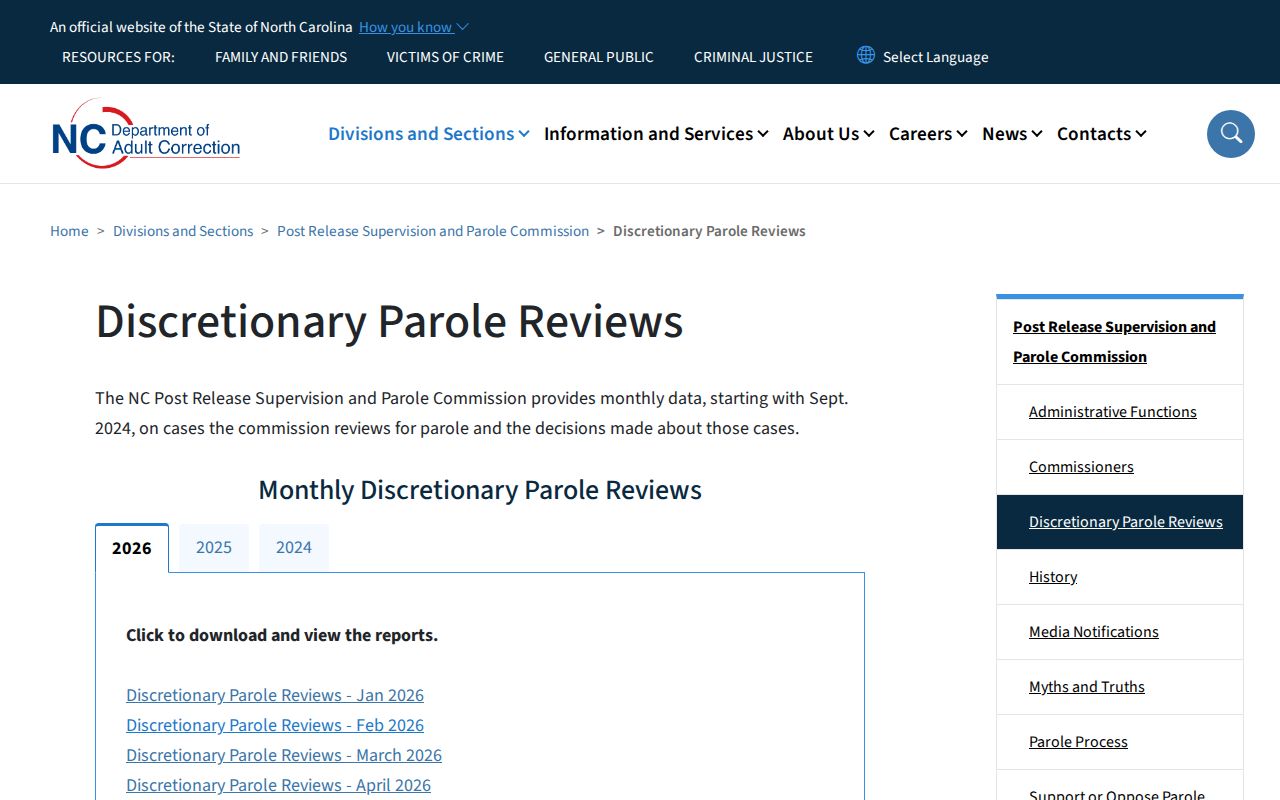
Use a matching person and case in the report, then confirm current custody or supervision through NCDAC rather than treating the report alone as a completed release.
No Formal Clay County Parole Hearings
North Carolina’s Commission states that it conducts no formal hearings and does not personally meet offenders during parole review. There is therefore no individual hearing calendar to search for a Clay County person. This is an affirmative feature of the state process, not merely a calendar that research failed to locate.
Use monthly Discretionary Parole Reviews for published cases and decisions, then contact the Commission about the named case. The official Commission overview is shown in the source screenshot below.
The Commission’s official overview explains its role and its no-formal-hearings process.
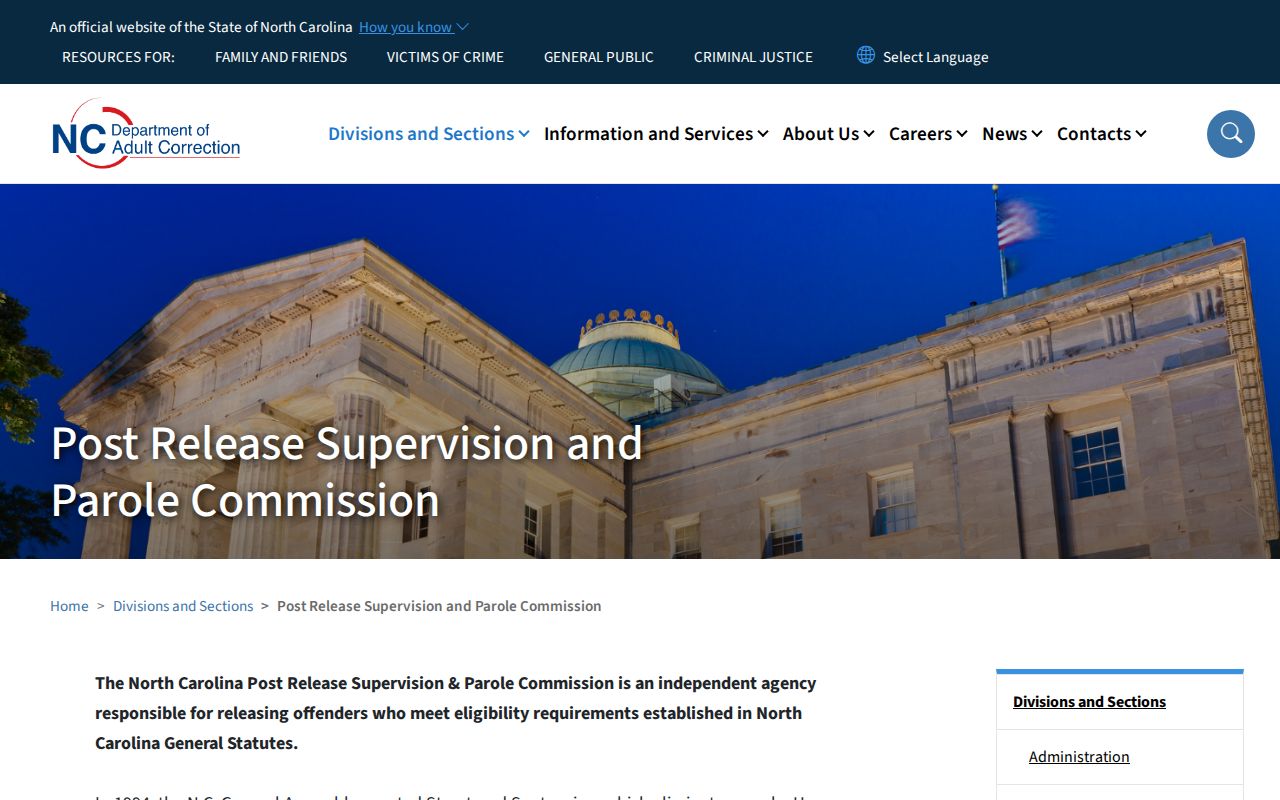
For a named matter, contact the Commission at 2020 Yonkers Road, 4222 Mail Service Center, Raleigh, NC 27699-4222, by phone at 919-716-3010, fax at 919-716-3987, or email at Parole.Commission@dac.nc.gov.
How Clay County Supervision Ends
Release from prison begins, rather than ends, the supervised part of many modern sentences. G.S. 15A-1368.2 generally places covered Class B1 through E felons on a twelve-month supervision segment and covered Class F through I felons on a nine-month segment, with a sixty-month provision for specified maximum sentences. The full Article 84A and the person’s judgment control.
Earned time can help determine the point at which a covered prisoner moves from confinement to supervision, but it does not turn that move into unconditional discharge. The maximum imposed term, applicable supervision segment, credits, and sentence class must be read together. A Clay County conviction label alone does not provide enough information to calculate the supervision end.
Supervision may end through expiration, discharge, or another formal agency or court action applicable to that case. The public record may later show an inactive or terminated status, but a user should record the exact label and date. Final discharge from NCDAC does not erase the underlying public conviction record, settle an unrelated case, or prove when Clay County jail staff processed an earlier departure.
After the expected end date, search OPI again and compare the supervision entry. If the label is unclear, ask NCDAC for the public status and date. For historical proof, retain the official record or response that identifies the person, supervision type, and termination event rather than relying on a saved search-result summary.
Public Record Search
Sponsored Results